

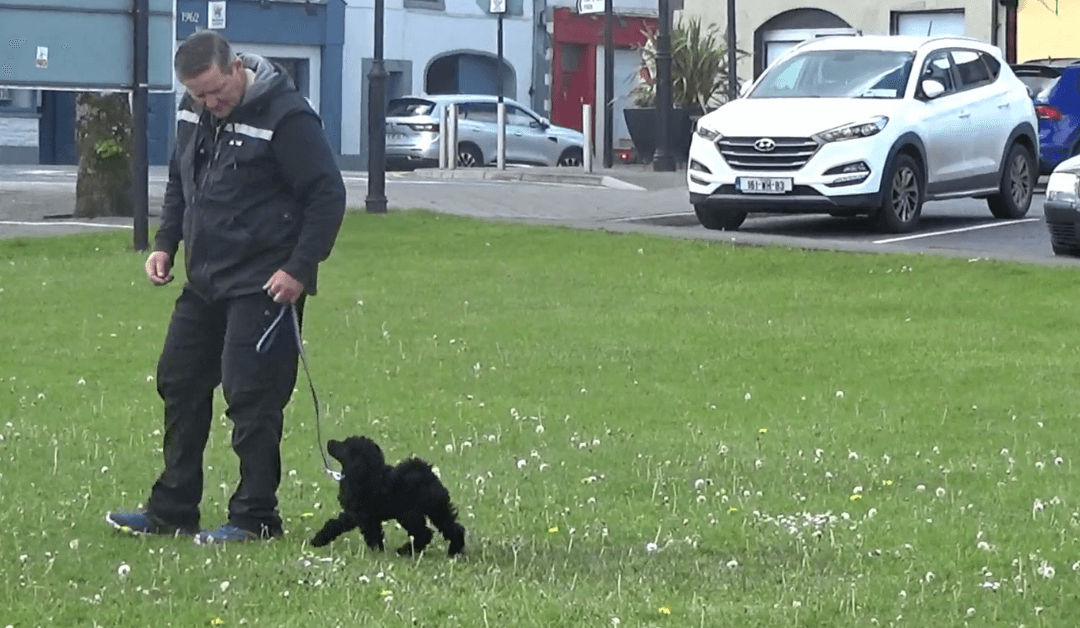
How to Stop Your Dog Pulling on the Lead
Pulling is the most common thing people complain to us about, and the reason is simple. Pulling works. Every time your dog leans into the lead and moves forward, they get closer to the tree, the dog or the smell they were aiming for. The lead goes tight and they arrive.
Add the fact that most dogs walk faster than we do, and you can see why a dog who has never been taught anything else pulls.
Why gadgets don’t fix it
Harnesses, head collars and no-pull gadgets can make a strong dog easier to hold, and they have their uses. What they don’t do is teach the dog to walk beside you. Take the gadget off and the dog goes back to what they know.
If a dog is hard to manage, use whatever helps you stay safe while you train. Just don’t expect the equipment to do the training.
What to teach instead
The idea is straightforward: a loose lead gets the dog where they want to go, and a tight lead doesn’t.
Start somewhere boring. Don’t begin on a busy street. Use the house, the garden or a quiet corner. Your dog can’t learn much when they’re excited and their nose is full of smells.
Reward the position you want. Decide which side your dog is going to walk on. Every time they’re beside you with a slack lead, give them a treat at your leg. It should be right where you want them, not out in front. Dogs learn a lot from where the reward is delivered.
Stop when the lead goes tight. Don’t yank, and don’t pull back. Just stop. Wait until the lead is slack, either because the dog has looked back at you or stepped back, and then walk on. Going forward is what they want, so it becomes their reward for a loose lead.
Change direction. If your dog surges ahead, turn and go the other way. Say nothing. They’ll find themselves at the back of the lead and have to catch up. It teaches them to keep an eye on where you are.
Keep sessions short. Five minutes of good work beats half an hour of frustration. If you’re both getting cross, stop and have a play instead.
Build it up slowly. Once your dog is good in the garden, try the pavement outside the house, then a quiet street, then somewhere with a few distractions. If it all falls apart, go back a step. That isn’t a failure. It means you’ve moved too fast.
The mistakes we see most
- Letting your dog pull “just this once”. Walking past a smell they really want, or to the park because you’re running late. Every time a tight lead works, it undoes practice.
- Only training on the walk. If the walk is the only time you practise, your dog is working at their most excited. Do the training separately and the walk gets easier.
- Expecting too much too early. A young dog walking calmly past other dogs and cyclists is an advanced skill. Give them time.
- Giving up. Loose lead walking takes weeks of steady work for most dogs. It’s very doable, but it’s not quick.
Do I need a perfect heel?
No. Most people are looking for a lead that stays loose and a dog who isn’t dragging them around. A formal heel, with the dog glued to your leg and watching you, is something else, and is useful for competition and some working dogs. For a pet, a relaxed loose lead is what you’re after.
When it’s more than pulling
Some dogs lunge, bark or go wild when they see other dogs, people or bikes. That’s a separate problem, and just tightening up the lead work won’t solve it. If that sounds like your dog, have a look at our page on reactive dog training.
Two ways to get help with it
If you want to start straight away and work at your own pace, our online course Walk The Walk is a video workshop and tutorial bundle for owners of dogs who pull. You work through it at home, it costs far less than lessons, and it suits people who are happy to put in the practice.
If you’d rather have someone watch you and your dog and correct you as you go, lead work is one of the first things we cover in our one-to-one lessons. Paul watches how you handle the lead, where your dog’s attention is and when they start to pull, and then shows you what to change. You get hands-on help with your own dog, and homework to do before the next session. Lessons run at our facility near Nantwich, Monday to Friday.
Want help with your own dog? Tell us about your dog and we’ll get back to you for a chat about it.
Related: One-to-One Dog Training | Book a Consultation