

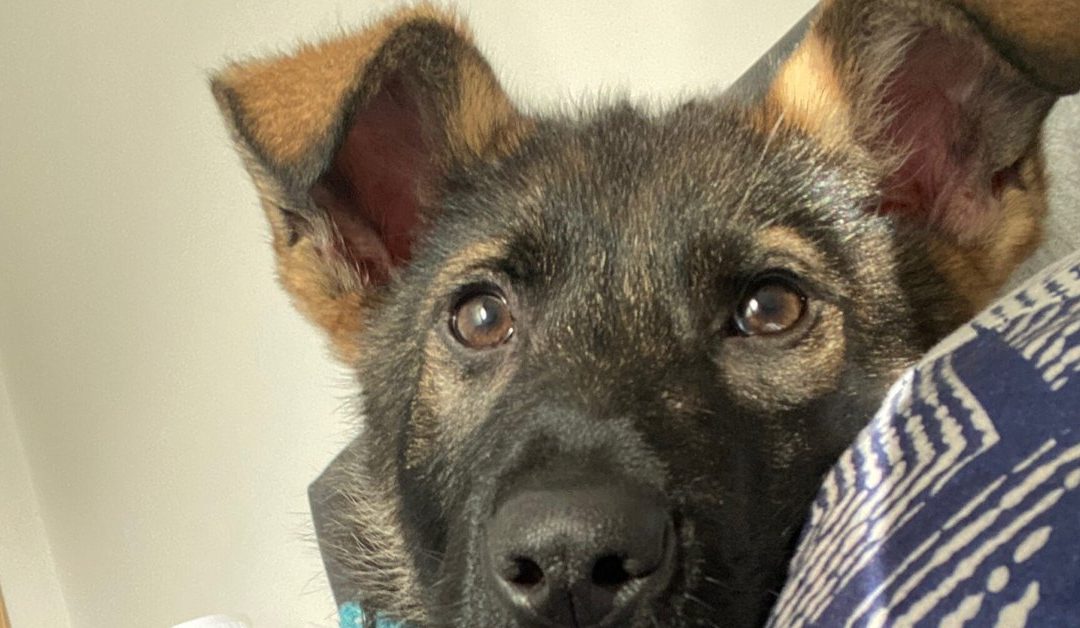
Puppy Biting: Why It Happens and What to Do
If your puppy’s teeth have left you with scratched hands and ripped trousers, you’re in good company. Puppies bite. It’s how they explore the world, play with each other and cope with teething, and it isn’t a sign that you’ve got an aggressive dog.
It does need dealing with, though, because a habit that hurts a little at eight weeks hurts a lot at five months.
Why puppies bite
Puppies have no hands, so they use their mouths. They also play by grabbing and wrestling, and your hands and feet move in an interesting way. Add teething, which runs roughly from three to six months, and you have a puppy who wants to chew everything.
The most common reason we see for a puppy who has gone wild is tiredness. Young puppies need a lot of sleep, more than most owners expect. An overtired puppy behaves like an overtired toddler: frantic, grabby and impossible to reason with.
What makes it worse
- Waving your hands about or pulling them away quickly. It looks like a game.
- Squealing or shouting. Some puppies stop, but many think it’s part of the fun.
- Smacking, holding the mouth shut or pinning the puppy down. It can make them defensive, and you’ll end up with a puppy who bites harder or is wary of your hands.
- Letting a puppy play rough and expecting them to know when to stop.
What helps
Give them something better to bite. Keep a toy in your pocket. When the teeth come out, move the puppy on to the toy and praise them when they take it. You want them to learn that toys are for biting and people aren’t.
Stop the game when teeth touch skin. Go quiet, take your hands away and stand up. Wait a moment, then start again calmly. The puppy learns that biting ends the fun, and that’s a message they understand.
Keep play calm. If the puppy is winding up, stop before it turns into a frenzy. A few minutes of quiet chewing on a chew or stuffed toy is better than another round of chasing.
Put them to bed. If your puppy is nipping and hopping about and nothing seems to work, they’re probably tired. A crate or pen with something to chew usually fixes it within minutes.
Give everyone the same rules. If one person lets the puppy chew their sleeve and another doesn’t, the puppy will keep trying.
How long does it take?
Most puppies improve a great deal as their adult teeth come through, but only if they’ve been shown what to do instead. Waiting for them to grow out of it often just means a larger dog with the same habit.
When it might be more than normal play
Most biting is puppy behaviour. It’s worth getting advice if the puppy goes stiff, growls and bites when you touch food, toys or their bed, or if the biting is getting harder and more determined rather than easing off. That is a different problem and it’s much easier to deal with early.
Our one-to-one lessons are a good fit for puppy owners who want to get it right from the start. Paul works with you and your puppy together, so you learn how to handle the biting rather than just being told what to do. We have more on getting started in puppy training in Cheshire.
Want help with your own dog? Tell us about your dog and we’ll get back to you for a chat about it.
Related: One-to-One Dog Training | Book a Consultation